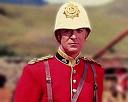
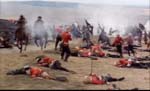
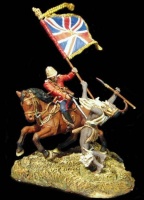
Film Zulu Dawn:General Lord Chelmsford: For a savage, as for a child, chastisement is sometimes a kindness. Sir Henry Bartle Frere: Let us hope, General, that this will be the final solution to the Zulu problem.
Due to recent events on this forum, we have now imposed a zero tolerance to harassment and bullying. All reports will be treated seriously, and will lead to a permanent ban of both membership and IP address.
Any member blatantly corresponding in a deliberate and provoking manner will be removed from the forum as quickly as possible after the event.
If any members are being harassed behind the scenes PM facility by any member/s here at 1879zuluwar.com please do not hesitate to forward the offending text.
We are all here to communicate and enjoy the various discussions and information on the Anglo Zulu War of 1879. Opinions will vary, you will agree and disagree with one another, we will have debates, and so it goes.
There is no excuse for harassment or bullying of anyone by another person on this site.
The above applies to the main frame areas of the forum.
The ring which is the last section on the forum, is available to those members who wish to partake in slagging matches. That section cannot be viewed by guests and only viewed by members that wish to do so.
Fair Use Notice
Fair use notice.
This website may contain copyrighted material the use of which has not been specifically authorised by the copyright owner.
We are making such material and images are available in our efforts to advance the understanding of the “Anglo Zulu War of 1879. For educational & recreational purposes.
We believe this constitutes a 'fair use' of any such copyrighted material, as provided for in UK copyright law. The information is purely for educational and research purposes only. No profit is made from any part of this website.
If you hold the copyright on any material on the site, or material refers to you, and you would like it to be removed, please let us know and we will work with you to reach a resolution.
Lord Chelmsford, the Commander-in-Chief of British forces during the war, initially planned a five pronged invasion of Zululand designed to encircle the Zulu army and force them to fight as he was concerned that the Zulus would avoid battle. In the event he settled on three invading columns with the main center column, now consisting of the previously called No. 3 Column and Durnford's No.2 Column, under his direct command. He moved his troops from where they were stationed in Pietermaritzburg to a forward camp at Helpmekaar, past Greytown. On 9 January 1879 they moved to Rorke's Drift, and early on 11 January commenced crossing the Buffalo River into Zululand.
The backbone of the British force under Lord Chelmsford consisted of twelve regular infantry companies: six each of both the 1st and 2nd battalions, 24th Foot, 2nd Warwickshire Regiment, which were hardened and reliable troops. In addition, there were approximately 2,500 local African auxiliaries of the Natal Native Contingent, led by European officers but considered generally of poor quality; some irregular cavalry units, and a detachment of artillery consisting of two field guns and several Congreve rockets. Adding on wagon drivers, camp followers and servants, there were more than 4,000 men in the Number 3 Column[12], not including Durnford's Number 2 Column. Because of the urgency required to accomplish their scheme, Bartle Frere and Chelmsford began the invasion during rainy season. This had the unfortunate consequence of slowing the British advance to a crawl.
The Zulu army, while a product of a warrior culture, was essentially a militia force which could be called out in time of national danger. It had a very limited logistical capacity and could only stay in the field a few weeks before the troops would be obliged to return to their civilian duties. Cetshwayo sent the 24,000 warrior strong main Zulu impi from near present-day Ulundi, on the 17th of January, across the White Umfolozi River. On the 18th, some 4,000 warriors were detached from the main body to attack Pearson's column near Eshowe. The remaining 20,000 Zulus camped at the isiPhezi ikhanda. On the 19th they arrived and camped near Babanango mountain. On the 20th they moved and camped near Siphezi mountain. Finally, on the 21st they moved into the Ngwebeni valley from where they planned to attack the British on the 23rd and where they stayed concealed until their discovery by Raw's scouts on the 22nd of January. The speed of the Zulu advance compared to the British is marked. The Zulu impi had advanced over 50 miles in 5 days while Chelmsford had only advanced a bit over 10 miles in 10 days.
The British under Lord Chelmsford pitched camp at Isandlwana on 20 January, but did not follow standing orders to entrench. No laager, circling of the wagons, was formed. Chelmsford did not see the need for the laager, stating, "It would take a week to make.".But the chief reason for the failure to take defensive precautions appears to have been that the British command severely underestimated the Zulu capabilities. The experience of numerous colonial wars fought in Africa was that the massed firepower of relatively small bodies of professional European troops armed with modern firearms and artillery, and supplemented by local allies and levies, would march out to meet the natives whose ragged, badly equipped armies would put up a brave struggle, but in the end would succumb. Chelmsford believed that a force of over 4,000, including 1,000 British infantry armed with Martini-Henry rifles, as well as artillery, had more than sufficient firepower to overwhelm any attack by Zulus armed only with spears, cowhide shields and a few firearms such as Brown Bess muskets. Indeed, with a British force of this size, it was the logistical arrangements which occupied Chelmsford's thoughts. Rather than any fear that the camp might be attacked, his main concern was managing the huge number of wagons and oxen required to support his forward advance.
Once he had established the camp at Isandlwana, Chelmsford sent out two battalions of the Natal Native Contingent to scout ahead. They skirmished with elements of a Zulu force which Chelmsford believed to be the vanguard of the main enemy army. Such was the over-confidence in British military training and firepower that he divided his force, taking about 2,500 men, including half of the British infantry contingent, and set out to find the main Zulu force with the intention of bringing them to battle, so as to achieve a decisive victory. It never occurred to Chelmsford that the Zulus he saw were diverting him away from their main force.
Chelmsford left five companies, around 70–80 fighting men in each, of the 1st battalion and one stronger company of around 150 men from the 2nd battalion of the 24th behind to guard the camp, under the command of Brevet Lieutenant Colonel Henry Pulleine. Pulleine's orders were to defend the camp and wait for further instructions to support the General as and when called upon. Pulleine also had around 500 men of the Natal Native Contingent and approximately 200 local irregulars who were mounted. He also had two artillery pieces, with around 70 men of the Royal Artillery. In total, some 1,300 men and 2 guns to defend the camp.
Pulleine, left in command of a rear position, was an administrator with no experience of front-line command on a campaign. Nevertheless, he commanded a strong force, particularly in respect of the six veteran regular infantry companies, which were experienced at colonial combat. The mounted vedettes, cavalry scouts, patrolling some 7 miles from camp reported at 7A.M. that groups of Zulus, numbering around 4,000 men, could be seen. Further reports arrived to Pulleine during the early morning, each reporting movements, both large and small, of Zulus. There was speculation among the officers whether these troops were intending to march against Chelmsford's rear or towards the camp itself.
Around 10:30A.M., Colonel Anthony Durnford arrived from Rorke's Drift with 5 troops of the Natal Native horse and a rocket battery. This put the issue of command to the fore because Durnford was senior and by tradition would have assumed command . However, he did not over-rule Pulleine's dispositions and after lunch he quickly decided to take to the initiative and move forward to engage a Zulu force which, at that point, Pulleine and Durnford judged to be moving against Chelmsford's rear. He asked for a company of the 24th, but Pulleine was reluctant to agree since his orders had been specifically to defend the camp.
Chelmsford had underestimated the disciplined, well led, well motivated and confident Zulu. The failure to secure an effective defensive position, the poor intelligence about the location of the main Zulu army, Chelmsford's decision to split his force in half, and the Zulus' tactical exploitation of the terrain and the weaknesses in the British formation, all combined to prove catastrophic for the troops at Isandlwana. In contrast, the Zulus responded to the unexpected discovery of their camp with an immediate and spontaneous advance. Even though the indunas would lose control over the advance, the training instilled in the warriors allowed the Zulu troops to form their standard attack formation on the run, their battle line deployed in reverse of its intended order
The Zulu Army was commanded by inDunas (Princes) Ntshingwayo kaMahole Khozalo and Mavumengwana kaNdlela Ntuli. The inDuna Dabulamanzi kaMpande, half brother of Cetshwayo, commanded the Undi Corps. While Chelmsford was in the field seeking them, the entire Zulu army had outmanoeuvred him, moving behind his force with the intention of attacking the British army on the 23rd. They were discovered at around 8A.M. by men of Lt. Raw's troop of scouts who chased a number of Zulus into a valley, only then seeing around 20,000 men of the main enemy force sitting in total quiet. Having been discovered the Zulu force leapt to the offensive. Raw's men began a fighting retreat back to the camp and a messenger was sent to warn Pulleine of the situation. Pulleine observed Zulus on the hills to his left front and sent word to Chelmsford which was received by the General between 9 and 10A.M.. The Zulu attack then developed in the traditional horns and chest of the buffalo, with the aim of encircling the British position. From Pulleine's vantage point in the camp, at first only the right horn and then the chest (centre) of the attack seemed to be developing. Pulleine sent out first one, then all of his six companies of the 24th Foot into an extended firing line, with the aim of meeting the Zulu attack head on and checking it with firepower. Durnford's men, upon meeting elements of the Zulu centre, had retreated to a donga, a dried out watercourse, on the British right flank where they formed a defensive line. The Rocket Battery under Durnford's command was overrun very early in the engagement. The two battalions of native troops were in Durnford's line, however only one in ten was armed with a rifleand many of them started to leave the battlefield at this point. Pulleine only made one slight change to the original disposition after about twenty minutes of firing, which was to bring in the companies in the firing line slightly closer to the camp. For a few hours until noon, the disciplined British volleys pinned down the Zulu centre, inflicting some casualties and causing the advance to stall. Indeed, morale remained high within the British line. The Martini-Henri rifle was a powerful weapon and the men were experienced. Additionally, the fire of the cannons of the Royal Horse Artillery forced some Zulu regiments to take cover behind the reverse slope of a hill. Nevertheless, the left horn of the Zulu advance was moving to outflank the British right flank position and envelop it. Durnford's men, who had been fighting longest, began to withdraw and their rate of fire diminished. Durnford's withdrawal exposed the right flank of the British regulars, which, with the general threat of the Zulu encirclement, caused Pulleine to order a withdrawal back to the camp. Durnford's retreat also exposed G Company, 2nd/24th, which was overrun relatively quickly. The retreat was performed with order and discipline and the men of the 24th conducted a fighting withdrawal into the camp. An officer in advance from Chelmsford's force gave this eyewitness account of the final stage of the battle at about 3 P.M.. "In a few seconds we distinctly saw the guns fired again, one after the other, sharp. This was done several times -a pause, and then a flash - flash! The sun was shining on the camp at the time, and then the camp looked dark, just as if a shadow was passing over it. The guns did not fire after that, and in a few minutes all the tents had disappeared." The presence of large numbers of bodies grouped together suggests the resistance was more protracted than originally thought and they made a number of desperate last stands. Evidence of this is that many of the bodies, today marked by cairns, were found in several large groups around the camp — including one stand of around 150 men. A Zulu account describes a group of the 24th forming a square on the neck of Isandlwana. What is clear is that the slaughter was complete in the area around the camp and back to Natal along the Fugitive's Drift. The fighting had been hand-to-hand and no quarter given to the British regulars. The Zulus had been commanded to ignore the civilians in black coats. The British fought back-to-back with bayonet and rifle butt when their ammunition had finally been expended. Isandlwana was an immediate catastrophe for the British. However, the victory of the Zulus did not end the war. With the decisive defeat of Chelmsford's central column, the entire invasion of Zululand collapsed and would have to be restaged. Not only were there heavy manpower casualties to the Main Column, but most of the supplies, ammunition, draught animals were lost. Unfortunately for the Zulu, as King Cetshwayo feared, the embarrassment of the defeat would force the policy makers in London, who to this point had not supported the war, to rally to the support of the pro-war contingent in the Natal government and commit whatever resources were needed to defeat the Zulu. Despite local numerical superiority, the Zulus did not have manpower, technological resources or logistical capacity to match the British in another, more extended, campaign.
Following the news of Isandlwana and Rorke's Drift the British and Colonials were in complete panic over the possibility of a counter invasion of Natal by the Zulu. Unknown to them, Cetshwayo, still hoping to avoid a total war, had prohibited any crossing of the border in retaliation and was incensed over the violation of the border by the attack on Rorke's Drift.
The British government's reasoning for a new invasion was threefold. The first was jingoistic to a degree and national honour demanded that the enemy, victors in one battle, should lose the war. The second concerned the domestic political implications with ramifications at the next parliamentary elections. However, despite the new invasion the British Prime Minister Disraeli and his party would lose the 1880 election. Finally, there were considerations affecting the Empire: unless the British were seen to win a clear-cut victory against the Zulus, it would send a signal that the British Empire was not invulnerable and that the defeat of a British field army could alter policy. Until then, one of the arguments against a war with the Zulu was that the costs could not be justified.[citation needed] If the Zulu victory at Isandlwana encouraged resistance elsewhere against the Empire, then committing the resources necessary to defeat the Zulu would in the long term prove cheaper than fighting wars the Zulu success inspired against British Imperialism elsewhere.
Near the end of the battle, about 4000 Zulu warriors of the unengaged reserve Undi impi, after cutting off the retreat of the survivors to the Buffalo River southwest of Isandlwana, crossed the river and attacked the fortified mission station at Rorke's Drift. It was defended by only 139 British soldiers, but the battle at Rorke's Drift turned out very differently from the Battle at Isandlwana. The British inflicted serious casualties upon the attacking Zulu, and successfully beat them back. Eleven Victoria Crosses were awarded to defenders of Rorke's Drift, the most ever received by a regiment for a single action.
After Isandlwana, the British field army was heavily reinforced and re-invaded Zululand, and Sir Garnet Wolseley was sent to relieve Chelmsford, as well as Bartle Frere. Chelmsford, however, avoided handing over command to Wolseley and managed to defeat the Zulus in a number of engagements, the last of which was the Battle of Ulundi followed by capture of King Cetshwayo. The British encouraged the subkings of the Zulus to rule their subkingdoms without acknowledging a central Zulu power. By the time King Cetshwayo was allowed to return home there was no longer an independent Zulu kingdom.
The measure of respect the British gained for their opponents as a result of Isandlawna can be seen that in none of the other engagements of the Zulu War did the British attempt to fight again in their typical linear formation in an open field battle with the main Zulu impi. Even in the final Battle of Ulundi the British army formed up in a square and the famous Thin Red Line of legend is nowhere in evidence.
Last edited by Admin on Sun Aug 16, 2009 12:05 am; edited 9 times in total (Reason for editing : up-date)
old historian2
Posts : 1093 Join date : 2009-01-14 Location : East London
Subject: Last Stand at Isandlwana painting Sun Jan 18, 2009 1:43 am
Last one for now Good Night. Cheers Old Historian2
Born: 28 July 1856, Aston, Warwickshire Died: 31 January 1927, Barrow-in-Furness, Lancashire
Citation: For his gallant conduct in having, at the imminent risk of his own life, saved that of Private Westwood, of the same regiment. On the 22nd January, 1879, when the camp at Isandhlwana was taken by the enemy, Private Wassall retreated towards the Buffalo River, in which he saw a comrade struggling, and apparently drowning. He rode to the bank, dismounted, leaving his horse on the Zulu side, rescued the man from the stream, and again mounted his horse, dragging Private Westwood across the river under a heavy shower of bullets.
(London Gazette issue 24734 dated 17 Jun 1879, published 17 Jun 1879.)
ADMIN
Posts : 4349 Join date : 2008-11-01 Age : 65 Location : KENT
Subject: TEIGNMOUTH MELVILL AND NEVILL JOSIAH AYLMER COGHILL Mon Jan 26, 2009 12:18 am
Joint Citation: The KING has been graciously pleased to approve of the Decoration of the Victoria Cross being delivered to the representatives of the undermentioned Officers and men who fell in the performance of acts of valour, and with reference to whom it was notified in the London Gazette that they would have been recommended to Her late Majesty for the Victoria Cross had they survived:– London Gazette, 2nd May, 1879. Lieutenant Teignmouth Melvill, 24th Foot. Lieutenant Nevill Josiah Aylmer Coghill, 24th Foot. "Lieutenant Melvill, of the 1st Battalion 24th Foot, on account of the gallant efforts made by him to save the Queen's Colour of his Regiment after the disaster at Isandlwanha [sic], and also Lieutenant Coghill, 1st Battalion 24th Foot, on account of his heroic conduct in endeavouring to save his brother officer's life, would have been recommended to Her Majesty for the Victoria Cross had they survived."
London Gazette Issue 27986 dated 15 Jan 1907, published 15 Jan 1907.)
ADMIN
Posts : 4349 Join date : 2008-11-01 Age : 65 Location : KENT
Subject: The Zulu Monument Fri Feb 27, 2009 9:24 pm
The Zulu impi at ISANDLWANA consisting of three corps under the command of Ntshingwayo kaMahole, Dabulamanzi kaMpande, and Mavumengwana kaNdlela, is estimated to have numbered 20000, and was made up of the uThulwana, uDloko, inDlu-yengewe, inDlondlo, uNokenke, uDududu, umKhulutshane, isaNgqu, umCijo, umHlanga, uVe, inGobamakhosi, and uMbonambi regiments. Armed with throwing spears (assegais), short, stabbing spears (iKlawa), oxhide shields (isiHlangu), war clubs (iWisa), and approximately 15000 assorted rifles in various calibres, they inflicted upon the British Army their greatest defeat at the hand of indigenous troops. The recently erected Zulu Monument, at left, represents the necklace awarded to Zulus who distinguished themselves in battle.
Pete Admin
old historian2
Posts : 1093 Join date : 2009-01-14 Location : East London
Subject: Re: The Battle of Isandlwana Fri May 15, 2009 1:27 pm
Zulu Victory Song, sung after the Battle of Isandlwana
Thou great and mighty chief! Thou who has an army The red soldiers came: We destroyed them. The mounted soldiers came: We destroyed them. The mounted police came: We destroyed them When will they dare To repeat their attack?
ADMIN
Posts : 4349 Join date : 2008-11-01 Age : 65 Location : KENT
Subject: Re: The Battle of Isandlwana Sat May 23, 2009 10:20 am
The Illustrated London News As it says. This Sketch was done on the spot. By Lieutenant Newnham Davis 3rd Buffs
Posts : 10882 Join date : 2009-04-07 Age : 67 Location : Melbourne, Australia
Subject: cairns at isandlwana Sun Aug 30, 2009 12:44 pm
hi littlehand. I have only read somewhere recently that the majority of the cairns have between 2 - 4 men under them . Cant remember where i read it, i think i was trying to find something else when i came across it. cheers 90th.
izabel
Posts : 19 Join date : 2009-08-14
Subject: Re: The Battle of Isandlwana Mon Aug 31, 2009 6:16 am
What an amazing photo
littlehand
Posts : 7076 Join date : 2009-04-24 Age : 55 Location : Down South.
Subject: Re: The Battle of Isandlwana Mon Aug 31, 2009 10:58 am
Thanks Izablel. I use this photograph as my Desktop Theme,
Thanks 90th for you reply. It just does not make any sense. Most of the bodies were left unburied and in the years after many of the bones were reburied and reburied again and what with the wild animals scattering the bones all over the place I doubt very much if there is a whole person in grave just bit and pieces. Could they not have created one mass grave and interned the remains in that. Then build a monument on the top. I understand they probably tried to bury the dead where they fell. But considering the aftermath of this battle with the dead being left unburied which they should not have been. I don’t think for one moment the dead would mind.
90th
Posts : 10882 Join date : 2009-04-07 Age : 67 Location : Melbourne, Australia
Subject: isandlwana burials Mon Aug 31, 2009 12:28 pm
hi littlehand. I listed NORRIS-NEWMAN 'S book earlier , i think under the publications section it is a very reasonable price ,well worth the money alone for MAJOR BLACK"S REPORT of his burial party to Isandlwana, which i think is 4 or more pages, he describes finding bodies of his friends, and where on the field they were found, which are still recognisable all these months later, and newmans own account is quite moving. If you have the money, grab it, you wont regret it. cheers 90th
90th
Posts : 10882 Join date : 2009-04-07 Age : 67 Location : Melbourne, Australia
Subject: isandlwana- re-visited. Mon Aug 31, 2009 2:24 pm
hi all This is the picture i have as my desk top theme. https://2img.net/h/i595.photobucket.com/albums/tt38/freeforum1879/InternetExplorerWallpaper.jpg cheers 90th.
ps. got the youngest child to post this for me, as i had no idea !!!!.
1879graves
Posts : 3362 Join date : 2009-03-03 Location : Devon
Subject: Re: The Battle of Isandlwana Tue Sep 01, 2009 6:30 pm
[You must be registered and logged in to see this image.] Keith Martin Collection
mons14
Posts : 101 Join date : 2009-10-28
Subject: Re: The Battle of Isandlwana Thu Oct 29, 2009 2:42 pm
What a fantastic thread - a great read. I especially enjoyed the Ian Knight video, what a treat to actually hear him speak. I've enjoyed many of his books and seeing him on the site speaking was truly amazing. I only wish the video captured his entire tour.
Regards,
David
Neil Aspinshaw
Posts : 553 Join date : 2009-10-14 Location : Loughborough
Subject: Re: The Battle of Isandlwana Wed Dec 02, 2009 10:48 pm
Interesting positions for google earth
Raws view point into Ingwebeni valley 28 deg 18'35 south 30 deg 44'33 east
Milnes Hill he viewed the camp from mangeni 28 deg 27'16 south 30 deg 46'16 east
The final position of Ansteys Company on manzimyama 28 deg 22'03 south 30 deg 38'10 east
Chelmsfordthescapegoat
Posts : 2593 Join date : 2009-04-24
Subject: Re: The Battle of Isandlwana Wed Dec 02, 2009 11:07 pm
Nice one Neil. Thanks. I'm getting quite into these arial views. Didn't know there was so much detail.
littlehand
Posts : 7076 Join date : 2009-04-24 Age : 55 Location : Down South.
Subject: Secrets of the dead. How the Battle unfolded Mon Dec 28, 2009 7:40 pm
Posts : 10882 Join date : 2009-04-07 Age : 67 Location : Melbourne, Australia
Subject: The Battle of Isandlwana. Tue Dec 29, 2009 4:39 am
Hi Littlehand. I have a copy of the actual video " Secrets of the Dead " Day of the zulu , well worth having . cheers 90th.
joe
Posts : 600 Join date : 2010-01-07 Location : UK
Subject: Re: The Battle of Isandlwana Fri Jan 08, 2010 3:31 pm
During the battle of Isandlwana what colour was the grass/groung was it green or was it dry and dusty Thanks, Joe
John
Posts : 2558 Join date : 2009-04-06 Age : 61 Location : UK
Subject: Re: The Battle of Isandlwana Fri Jan 08, 2010 8:24 pm
Joe. One of the members is travelling to the Battlefields in a few days time. As luck has it will be the same month the Battle of Isandlwana, so if you can wait until he returns hopefully he will be posting some photo’s giving a true colour of how it would have been back in 1879.
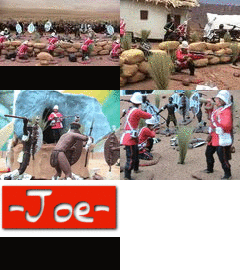
Have you started building the model yet. Or is it at planning stage.
joe
Posts : 600 Join date : 2010-01-07 Location : UK
Subject: Re: The Battle of Isandlwana Fri Jan 08, 2010 9:10 pm
At the minute it is just at planning stage although i have some of the soldiers thanks for your help, joe
Dave
Posts : 1603 Join date : 2009-09-21
Subject: Re: The Battle of Isandlwana Fri Jan 08, 2010 9:11 pm
I have seen quite a few photo's / Drawings of Isandlwana. But this image seems to show the dead at Isandlwana in some sort of valley. Can anyone explain why.
Posts : 10882 Join date : 2009-04-07 Age : 67 Location : Melbourne, Australia
Subject: battle of Isandlwana Fri Jan 08, 2010 10:30 pm
hi joe, I think you will find the grass was long , I think its been posted on the forum somewhere before, Also after the second invasion started the british came across the route used by the zulu army after it left Ulundi on its way to Isandlwana and they describe how the grass was still flattened all that time later , as it was easy to see what route they had taken. cheers 90th
90th
Posts : 10882 Join date : 2009-04-07 Age : 67 Location : Melbourne, Australia
Subject: battle of Isandlwana Fri Jan 08, 2010 11:23 pm
hi Dave. Forgot to answer your query about the valley effect. I think you will find you can put it down to Artistic Licence ! cheers 90th.
old historian2
Posts : 1093 Join date : 2009-01-14 Location : East London
Subject: Re: The Battle of Isandlwana Fri Jan 08, 2010 11:29 pm
Link to Jamies web-site. Could be based on the bottom photo. ????
Subject: Re: The Battle of Isandlwana Fri Jan 08, 2010 11:32 pm
I'm with 90th on this one "Artistic Licence !" But you could be right on location, there is a slight valley on the photo you linked.
Neil Aspinshaw
Posts : 553 Join date : 2009-10-14 Location : Loughborough
Subject: Re: The Battle of Isandlwana Sun Jan 10, 2010 4:40 pm
The Grass in january is lush green and is about knee height. It thins towards the mountian itself as it becomes more shale. Dec-March is the rainy season, winter sees the grass yellowing off. The image is the artists representation of the saddle between Isandlwana and Malhabamkhosi (Blacks Koppie) which is about 3800 feet high and a sloping hill as opposed to the crag shape of Isandlwana. The artists perpective is the approach from mageni along the old road. This view is about 300 yards further up the road. My own image. [You must be registered and logged in to see this image.]
I hope to do some more library images next week on my visit.
joe
Posts : 600 Join date : 2010-01-07 Location : UK
Subject: Re: The Battle of Isandlwana Sun Jan 10, 2010 7:03 pm
cheers mate for all your help, as i have not been to the battlefield myself (yet) it will be nice to see some new photos enjoy yourself cheers joe
joe
Posts : 600 Join date : 2010-01-07 Location : UK
Subject: Re: The Battle of Isandlwana Sun Jan 17, 2010 4:31 pm
hi i was wondering ifi someone could clear this up for me, at the battle of isandlwana ive heard the british soldiers were standing 6-8 feet away from each other in a line, however i have also heard that they were in 2-3 ranks (like in Zulu Dawn -on standing, one kneeling) hope someone can help thanks Joe
littlehand
Posts : 7076 Join date : 2009-04-24 Age : 55 Location : Down South.
Subject: Re: The Battle of Isandlwana Sun Jan 17, 2010 5:57 pm
I would imagine the formation you mentioned was used in the early stages of the battle, but quickly reverted to volley firing on the run, as they made their way back to the camp.
Is this the formation you mention. [You must be registered and logged in to see this image.]
Photo from the film Zulu Dawn.
Mr Greaves
Posts : 747 Join date : 2009-10-18
Subject: Re: The Battle of Isandlwana Sun Jan 17, 2010 7:14 pm
Apologies for that Littlehand, we must have been posting at the same time. How Odd.
"Durnford ordered his men to mount up and retire to the camp. One of the survivors met him as he rode in, looking for Pulleine; "he had, I think, already observed the state of affairs, for he was looking very serious". Indeed, the rest of the British line was now hanging dangerously in the air, with nothing to hold back the left horn. The evidence suggests Durnford met Pulleine and they decided to try to pull back the whole line, to try to take up a tighter position closer to the camp. Zulu witnesses recalled bugles being sounded along the line, and the red-coats abandoning their positions and retiring towards the camp, stopping now and then to deliver a volley as they did so."
G.
littlehand
Posts : 7076 Join date : 2009-04-24 Age : 55 Location : Down South.
Subject: Re: The Battle of Isandlwana Sun Jan 17, 2010 7:20 pm
Don't know what happen there, but what ever it was I lost my text i was posting. And i haven't got the time to re-write it. (Admin any suggestions to stop this happening again.)
24th
Posts : 1862 Join date : 2009-03-25
Subject: Re: The Battle of Isandlwana Sun Jan 17, 2010 7:26 pm
This happen to me sometime ago. Admin suggested, write your post on to a word document, and then copy and paste to forum.
littlehand
Posts : 7076 Join date : 2009-04-24 Age : 55 Location : Down South.
Subject: Re: The Battle of Isandlwana Sun Jan 17, 2010 7:28 pm
Excellent Idea. Thanks 24th. :lol:
ADMIN
Posts : 4349 Join date : 2008-11-01 Age : 65 Location : KENT
Subject: Re: The Battle of Isandlwana Sun Jan 17, 2010 8:14 pm
And it works.
littlehand
Posts : 7076 Join date : 2009-04-24 Age : 55 Location : Down South.
Subject: Re: The Battle of Isandlwana Sat Feb 06, 2010 12:56 am
Subject: Re: The Battle of Isandlwana Thu Feb 25, 2010 4:03 pm
hi was there any lancers left during the battle of did they all leave with Lord Chelmsford? thank joe
old historian2
Posts : 1093 Join date : 2009-01-14 Location : East London
Subject: Re: The Battle of Isandlwana Thu Feb 25, 2010 7:56 pm
Hi Joe. No lancers just mounted infantry.
90th
Posts : 10882 Join date : 2009-04-07 Age : 67 Location : Melbourne, Australia
Subject: isandlwana Fri Feb 26, 2010 1:11 am
hi joe. oh2 is correct , there werent any Lancers or Dragoons in the 1st invasion, they were sent when the call for re- enforcments arrived from STH.AFRICA. By memory I think they arrived in March , but happy to be corrected . cheers 90th.
joe
Posts : 600 Join date : 2010-01-07 Location : UK
Subject: Re: The Battle of Isandlwana Sat Apr 10, 2010 3:56 pm
hi, I have a few questions about Chelmsfords reaction to the notification of the battle had started.
When the battle started and a messenger was sent to Lord Chelmsford to tell him the battle had started and the camp was under attack, Did he try and pack up and march back to Isandlwana? However another messenger was sent telling him it was a false alarm so he carried on setting up camp. Did Chelmsford take the message seriosly? And finally Would he have made it back in time to save the camp if he had left as soon as he could get the men ready to go back?
thanks in advance
joe
90th
Posts : 10882 Join date : 2009-04-07 Age : 67 Location : Melbourne, Australia
Subject: isandlwana Sat Apr 10, 2010 9:34 pm
hi joe. I have posted these answers on the forum a while ago , but quickly . 1 / no , his forces were spread all over the place . 2 / not sure I have heard he recieved a message stating it was a false alarm. 3 / no . he wouldnt have made it back in time , and most likely being strung out on the road , he would have suffered the same fate as the camp. cheers 90th.
Dave
Posts : 1603 Join date : 2009-09-21
Subject: Re: The Battle of Isandlwana Sun Apr 11, 2010 9:30 am
I think Chelmsford surmised it was a false alarm, base on information received from Lieut B. Milne. Which was based on observation he from the top of the hill.
John
Posts : 2558 Join date : 2009-04-06 Age : 61 Location : UK
Subject: Re: The Battle of Isandlwana Sun Apr 11, 2010 10:59 am
Didn't Captain Church receive a message regarding reinforcments at Isandlwana.
joe
Posts : 600 Join date : 2010-01-07 Location : UK
Subject: Re: The Battle of Isandlwana Fri Apr 16, 2010 7:01 am
hi 90th, the source the false alarm story was was was written by Saul David
heres the link...- its in the Isandlwana sectionhttp://www.bbc.co.uk/history/british/victorians/zulu_01.shtml
thanks joe
90th
Posts : 10882 Join date : 2009-04-07 Age : 67 Location : Melbourne, Australia
Subject: isandlwana Fri Apr 16, 2010 8:57 am
hi joe. I dont think it was ever stated it was a false alarm , when Cford sent Milne up the hill with his telescope , Milne came down after an hour or so . And when asked by Cford what he could see , he replied he couldnt see much but the tents had not been struck. I dont think false alarm is the correct terminology, Happy to be corrected if anybody has primary source evidence . cheers 90th.
 Home
Home  Gallery
  Search
  Register
  Log in
  Calendar